Budget-minded apartment hunters who are facing skyrocketing rents or a lack of available units — especially in large cities — might want to explore another option: basement apartments.
Situated fully or partly below street level, these units are found in most buildings, and they’re also common in older homes that have been split up into individual units.
Sometimes called daylight basements, they feature at least one full-sized window or a sliding door, which brings in more light and fresh air. In some areas, a garden apartment can refer to a basement or partial-basement apartment.
Here are some things to keep in mind while you’re searching for your next place.
What should you look for in a basement apartment?

While building codes vary from state to state and from city to city in some cases, a basement apartment should have the following basic features:
- At least half of the unit is above ground
- Ceilings are at least seven feet high over more than 75 percent of the space
- At least one window in every room
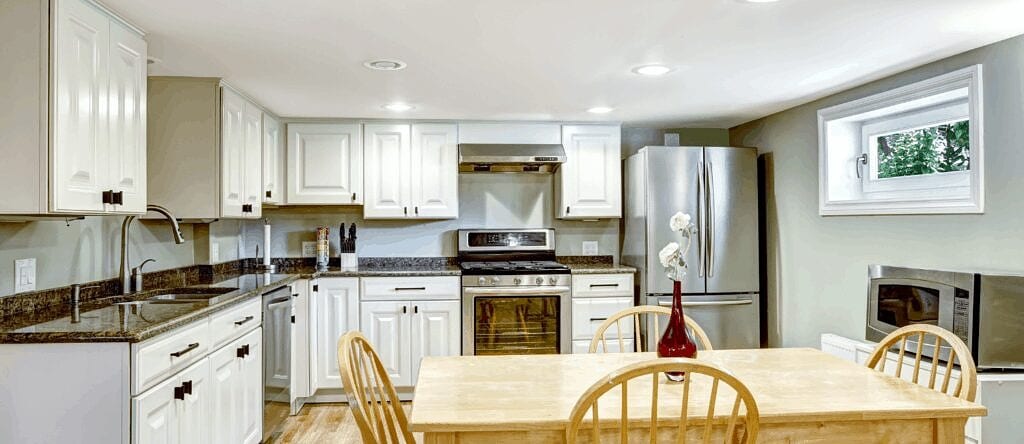
- A full kitchen with appliances
- A bathroom with tub and shower.
- Two exits from the bedroom — usually a door and a window
- Walls that have been damp and waterproofed
- All necessary electrical and plumbing systems in good working order
Ideally, the unit would also have a separate entrance, separate laundry area, recessed lighting and an open concept layout.
Pros of renting a basement apartment

A basement apartment may not be your first choice, but there are reasons why it might work for your living situation — and your budget.
Affordability
In high-rent locations, basement apartments are almost always cheaper than units on higher floors — sometimes by as much as 20 percent. And sometimes, landlords may throw in perks like free parking or utilities.
Space and privacy
Basement apartments often have more square footage than standard units, especially if you rent one that spans the whole lower level of a single-family home. Plus, they can offer more privacy because they often come with their own private entrance.
Savings on utilities
With cooler temperatures than above-ground units, basement apartments may not need air conditioning in the summer, so you’ll save on your electric bill for those months.
Perfect for shift workers
If you work nights, basement apartments will allow you to sleep easier during the day because they’re darker than above-ground units.
Cons of renting a basement apartment

There are potential negatives to this type of unit as well, so be sure you can live with these features before you commit:
Less natural light
Windows in basement apartments are usually smaller, and because they’re slightly below street level, you will get less natural light in the unit.
Security concerns
It’s easier for someone to break into a basement apartment, so you’ll need to make sure your windows and entrance are always locked when you’re not there or when you’re asleep.
It’s colder and damper
Due to heat rising, basement apartments tend to be colder during the winter months, so you’ll have to boost your heating system. Being partially underground, moisture is likely to seep in through cracks in the building’s foundation, so the place may feel or smell musty.
More noise
Sometimes, basement units lack soundproofing, so you’ll easily hear street noise and the neighbors above you. If your apartment is right near the shared laundry, you’ll hear that, too.
Low ceilings
If you’re tall or claustrophobic, basement apartments probably aren’t the best choice.
Questions to ask before renting a basement apartment

It’s always a good idea to find out as much as possible about a rental unit before signing a lease, but it’s especially important to ask the landlord a few specific questions.
Is your basement apartment legal?
Because local laws regulating basement apartments vary by state and city, ask whether the unit you’re interested in has been inspected and approved. Ask to see the building’s certificate of occupancy, which categorizes it as a multiple dwelling where the basement is a standalone unit you can legally live in.
Is the unit safe and secure?
If you’re considering a basement unit, ask the landlord what security measures are in place. Because basement apartments are easily broken into, be sure that there’s a good-quality lock on the entrance door. Fire escape routes, smoke alarms and carbon monoxide detectors should also be discussed.
Are there any health hazards?
Basements can flood easily if a pipe bursts, so ask the landlord about any recent flooding. If there’s lots of moisture, that can lead to mold and mildew problems. Insects and rodents are more common in basements, so find out if there are any such issues in the building.
Make a basement apartment feel like home
If you decide this type of unit is right for you, there are lots of hacks to make it feel comfortable, bright and airy. To maximize the amount of natural light that streams in, keep the space around your windows clear. Opt for sheer curtains and blinds, which offer privacy while allowing light in. Clear off your window sills, too, so nothing blocks the light.