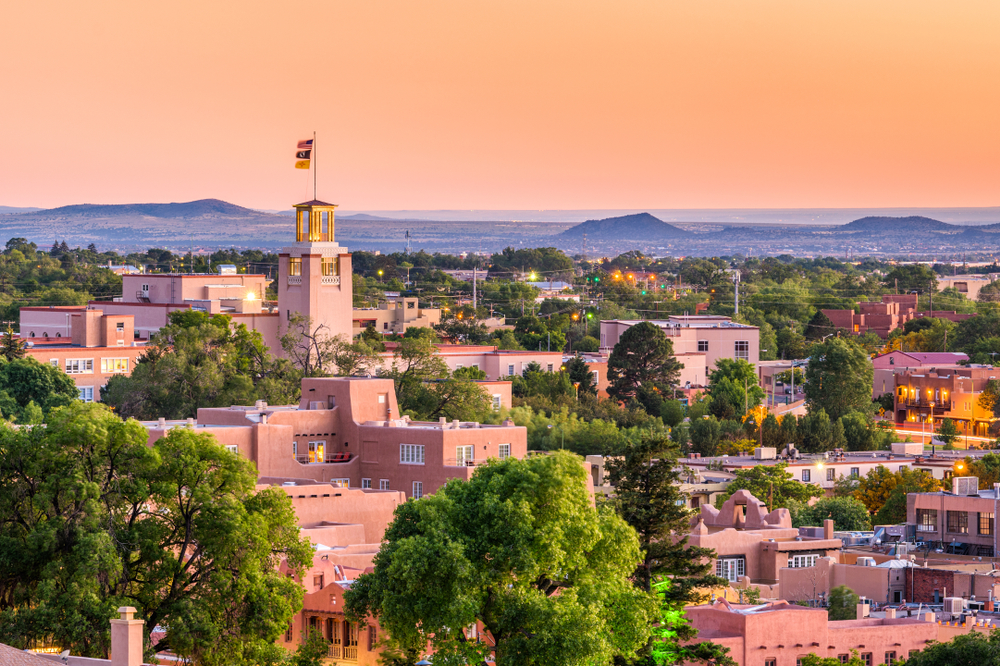
Picture this: You’re standing on the rim of a stunning desert canyon, the sun casting warm hues across the horizon. A hawk soars overhead, and the scent of roasting green chile drifts through the air. Living in New Mexico can feel like stepping into a painting, where rugged landscapes meet rich traditions, and every day holds the potential for discovery. But while the state’s beauty and culture are undeniable, life here comes with its share of challenges. This ApartmentGuide article takes you through the pros and cons of living in New Mexico so you can learn more about the “Land of Enchantment” and help you make an informed decision about your next home.

Renting in New Mexico snapshot
| Population | 2,117,555 |
| Avg. monthly rent | $1,461 per month |
| Most affordable cities to rent in New Mexico | Roswell, Farmington, Las Cruces |
| Most walkable cities in New Mexico | Albuquerque, Santa Fe, Hobbs |
1. Pro: A melting pot of traditions
New Mexico’s culture is significantly rooted in Native American, Hispanic, and Anglo influences, evident in everything from its architecture to its art. You’ll find this blend celebrated in festivals throughout the year, like the Albuquerque International Balloon Fiesta, where dazzling balloons fill the sky, or the Gathering of Nations Pow Wow, the largest event of its kind in North America. These traditions are more than just events, reflecting centuries of shared history and storytelling.
2. Con: Risk of drought
Water scarcity is a constant challenge in New Mexico. With much of the state dependent on the Rio Grande and underground aquifers, extended droughts can make water conservation a part of daily life. During the hotter months, restrictions often come into play, limiting outdoor watering and encouraging residents to rethink how they use this precious resource. While this creates awareness about sustainability, it’s an adjustment, especially for those coming from water-rich regions.

3. Pro: Every corner has something to explore
Whether you’re trekking across the otherworldly dunes of White Sands, skiing the powdery slopes of Taos, or descending into the breathtaking chambers of Carlsbad Caverns, the state’s outdoor activities are nothing short of spectacular. National parks and forests stretch across the terrain, with trails that wind through deserts, mountains, and everything in between. It’s the kind of place where you can discover a new favorite spot every weekend.
4. Con: Summers in New Mexico don’t mess around
Summers in New Mexico are not for the faint of heart. The intense heat can feel relentless, especially in the southern desert regions where temperatures often soar into triple digits. Combined with dry air and strong sunlight, these conditions can be challenging for outdoor activities. Staying hydrated and seeking shade become second nature, and for some, the long, sweltering months can take a toll.

5. Pro: Plenty of affordable places to live
Life in New Mexico comes with a surprising perk—affordability. Housing costs are lower than the national average, with cities like Las Cruces where a one-bedroom apartment goes for $1,010. As for housing prices, the median home sale price is $314,462. Overall the cost of living including utilities and everyday expenses tends to be manageable, leaving you with more room in your budget.
6. Con: Relying on your car to get around
Public transportation in New Mexico is limited, even in the larger cities. Albuquerque, for instance, has a transit score of just 29, meaning most residents rely heavily on cars to get around. In rural areas, this dependence is even greater, with long distances between towns making access to essential services more challenging. If you’re moving here, you’ll likely need a reliable vehicle to navigate life in the Land of Enchantment.

7. Pro: Historic sites, towns, and attractions
The state’s landmarks are like stepping into a time machine, from the ancient Taos Pueblo, a living community that’s been inhabited for over a thousand years, to the adobe-lined streets of Old Town Albuquerque. Each site tells a story of resilience and adaptation, offering a glimpse into the lives of those who shaped the region over millennia.
8. Con: Rural life means fewer amenities
For those living outside of Albuquerque or Santa Fe, cultural amenities can be harder to come by. In smaller towns and rural areas, theaters, museums, and galleries are often limited or located hours away. While these communities have their own charms, the lack of easily accessible events and cultural attractions may leave residents longing for the conveniences of city life.

9. Pro: The food is authentic here
Food in New Mexico isn’t just a meal—it’s an experience steeped in tradition and flavor. Green chile is practically a way of life, with everything from burgers to stews showcasing its bold heat. Dishes like Navajo tacos and carne adovada highlight the state’s deep-rooted culinary traditions. And for those with a sweet tooth, fresh biscochitos—the state cookie—are the perfect way to end a meal.
10. Con: Potholes and patchy Wi-Fi
Infrastructure is a work in progress in New Mexico. Rural roads often need repair, and broadband access can be inconsistent in many parts of the state. This can create daily challenges, from longer commutes to slower internet speeds. While improvements are being made, these issues can be a source of frustration for residents who rely on modern conveniences.

11. Pro: Stargazing shouldn’t be missed
If you’ve ever wanted to lose yourself in the night sky, New Mexico is the perfect place. With minimal light pollution and some of the clearest skies in the country, stargazing becomes a nightly event. Designated dark-sky communities like Silver City provide a front-row seat to the galaxy, while observatories like the Very Large Array let you dive deeper into the mysteries of space.
12. Con: Slim pickings for jobs
Job opportunities in New Mexico can be limited, especially outside major industries like government, defense, and energy. Many smaller towns have fewer private-sector options, which can make finding work more challenging. For those looking to settle down here, researching the local job market and considering remote work might be necessary to make the move successful.
Methodology : The population data is from the United States Census Bureau, walkable cities are from Walk Score, and rental data is from Redfin.